Shepherd
http://www.100md.com
《e Natural Health Center》
 |
 |
 |
 |
Vegetables
Shepherd
Latin:
Capsella bursa-pastoris
Origin:
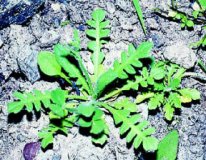
Shepherd is the whole grass of Capsella bursa-pastoris (L.) Medik., of the family Cruciferae. The plant is grown on arable land, gardens, waste places, etc., in China, Iraq, Italy, Poland, Spain, Turkey, USA, etc.
, http://www.100md.com
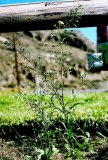
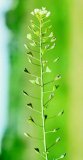
The annual plant grows to about 0.3 m by 0.1 m. The flower is white four-parted; seeds develop in a triangular, flattened pod (purse), notched at the top. It can produce over 33,000 seeds per plant.
It is in flower all year, and the seeds ripen all year. The flowers are hermaphrodite (have both male and female organs). The plant is self-fertile. It is noted for attracting wildlife. The plant can grow in semi-shade (light woodland) or no shade. It requires dry or moist soil.
, 百拇医药
Leaves are usually available all year round, though they can also be dried for later use.
Also called Shepherd's Purse.
Properties:
Sweet in flavor, mild in nature, it is related to the channels of the liver, heart and spleen.
Functions:
Regulates the spleen, induces diuresis, arrests bleeding and improves eyesight.
, 百拇医药
The plant has been ranked 7th amongst 250 potential anti-fertility plants in China. It has proven uterine-contracting properties and is traditionally used during childbirth.
Applications:
Shepherd is used to treat dysentery (severe diarrhea), hydrops (recurrent vertigo accompanied by ringing in the ears and deafness), strangury (painful discharge of urine), hematemesis (vomiting blood), nose-bleeding, menorrhagia (profuse menstrual flow), metrorrhagia (profuse uterine bleeding) or pain and swelling due to blood congestion.
, 百拇医药
Dosage and Administration:
To be decocted, sauteed, or made into dumplings for eating. It is to be used as an ingredient of pills, powder, or to be mashed for external application.
The leaves are served raw or cooked. The young leaves, used before the plant comes into flower, make a fine addition to salads. The leaves are a cress and cabbage substitute, becoming peppery with age.
, 百拇医药
The young flowering shoots can be eaten raw or cooked. They are rather thin and fiddly but the taste is quite acceptable.
Seed is eaten raw or cooked. It can be ground into a meal and used in soups, etc. It is very fiddly to harvest and utilize, the seed is very small.
The seedpods can be used as a peppery seasoning for soups and stews.
The fresh or dried root is a ginger substitute.
, 百拇医药
Cautions on Use:
Reference Materials:
Toxic or Side Effects:
Modern Researches:
Shepherd contains organic acid (oxalic acid, tartaric acid, malic acid, pyruvic acid, p-aminobenzene sulfonic acid and fumaric acid), amino acid (arginine, aspartic acid, proline, methionine, leucine, glutamic acid, glycine, alanine, cystine, cysteine), sugar (sucrose, sorbose, lactose, aminoglucose, sorbitol, mannitol, adonitol), inorganic substances (potassium, calcium, iron, chlorine, phosphorus, manganese) and choline, acetylcholine, brucine, saponin, flavonoids.
, 百拇医药
Every 5OO g of shepherd contains 21.2 g of protein, 1.6 g of fat, 24 g of sugar, 1680 mg of calcium, 292 mg of phosphorus, 25.2 mg of iron, 12.8 mg of carotene, 0.56 mg of thiamine, 0.76 mg of ovoflavin, 2.8 mg of nicotinic acid, 220 mg of vitamin C.
The seed contains 35% of a fatty oil. This oil can be extracted and is edible.
Shepherd is a commonly used domestic remedy, being especially efficacious in the treatment of both internal and external bleeding, diarrhoea, etc.
, 百拇医药
A tea made from the whole plant is antiscorbutic (counteracting scurvy), astringent, diuretic, emmenagogue, haemostatic (check bleeding), hypotensive, oxytoxic, stimulant, vasoconstrictor (narrowing of the lumen of blood vessels), vasodilator (widening of the lumen of blood vessels) and vulnerary (healing wounds). A tea made from the dried herb is considered to be a sovereign remedy against haemorrhages of all kinds--the stomach, the lungs, the uterus and more especially the kidneys. The plant can be used fresh or dried, for drying it is harvested in the summer. The dried herb quickly loses its effectiveness and should not be stored for more than a year.
, http://www.100md.com
Clinical trials on the effectiveness of this plant as a wound herb have been inconclusive. It appears that either it varies considerably in its effectiveness from batch to batch, or perhaps a white fungus that is often found on the plant contains the medically active properties.
The plant is a folk remedy for cancer--it contains fumaric acid which has markedly reduced growth and viability of Ehrlich tumour in mice.
A homeopathic remedy is made from the fresh plant. It is used in the treatment of nose bleeds and urinary calculus., 百拇医药