BIOMECHANICAL STUDY AND CLINICAL APPLICATION OF INTERFERENCE SCREW FIXATION FOR CERVICAL SPINE BONE GRAFTS
作者:MEI Fang-rui(梅芳瑞), ZHANG Zheng-feng(张正丰)
单位:Department of Orthopedics,MEI Fang-rui(梅芳瑞), ZHANG Zheng-feng(张正丰) Xinqiao Hospital, the Third Military Medical University, Chongqing, 400037
关键词:
中华创伤杂志980445 Objective The healing stability of cervical spine bone grafts was compared under 3 different conditions and the clinical application of interference cancellous bone screw fixation for the cervical spine bone grafts after discectomy or corpectomy was reported.
, 百拇医药
Methods On 5 freshly prepared specimens of the cervical spine from adult human cadavers, the pullout strength of anterior cervical spine bone grafts after discectomy performed with Bailey and Smith-Robinson techniques was determined with biomechanical test under 3 conditions, bone grafts without fixation, bone grafts fixed with interference cortical bone screw and bone grafts fixed with interference cancellous bone screws.
Results The pullout strength in the first condition was 77.4±14.0 N and 62.6±26.7 N for Bailey and Smith-Robinson techniques respectively, that of the second condition was 88.8±24.0 N and 88.1±16.6 N for the 2 techniques respectively and that of the third condition was 144.88±38.4 N and 144.6±33.6 N for the 2 techniques respectively. The pullout strength was significantly higher under the third condition than under the first and second conditions. The pullout strength of cervical spine bone grafts after corpectomy performed with modified Bailey and Smith±Robinson techniques was also determined. The findings were in the similar pattern as those of the discectomy groups. In the 20 cases of cervical spine fracture/dislocation and cervical spondylotic myelopathy, solid bony healing occurred 10 to 14 weeks (an average of 12 weeks) after surgery. The patients were followed up from 3 months to 2.5 years and no case showing dislodgement of the grafts or screw was found in the followup period.
, 百拇医药
Conclusion Interference screw fixation is able to increase the healing stability of anterior cervical spine bone grafts and minimize the possibility of the dislodgement of the grafts or screws, so it is the technique of choice for the internal fixation of cervical spine bone grafts.
Anterior cervical discectomy and fusion is an established procedure for the treatment of spondylotic myelopathy and cervical spine fracture/dislocation. One of the common complications in the early stage after operation is the dislodgement of the bone graft and redislocation. Various operative procedures such as Smith±Robinson,1 Bailey2 and Cloward3 techniques have been developed and many internal fixation methods such as “Ⅰ” plate4 and Casper plate5 designed. The techniques listed above can increase the healing stability of the bone grafts but can not totally prevent the occurrence of the dislodgement of the bone grafts. Besides, internal fixation sometimes can result in other complications.
, 百拇医药
In 1991, Zou et al6 proposed the concept of interference screw fixation of the cervical spine and later Vazquez - Seoane et al7 performed a combined study concerning interference screw fixation which included a biomechanical study in vitro and an animal experimentation. Unfortunately, no clinical application was discussed. On the basis of the concept of interference screw fixation, the authors of this paper manufactured 4.0 mm cancellous bone screws and compared the healing stability of cervical spine bone grafts after simple bone grafting and simple grafting reinforced with cortical bone screws and cancellous bone screws. Here is our report.
, 百拇医药
MATERIALS AND METHODS
Biomechanical study
Five freshly prepared specimens of cervical spine were obtained from adult human cadavers, x-ray-films revealed no degenerative changes of the cervical spine. The specimens were stored at -40° ready for use. When experiments were being done, all the musculature attaching to the spine was removed after the specimen was fully thawed. On every specimen, one test to determine the pullout strength after discectomy of Smith-Robinson technique and Bailey technique and one test to determine the pullout strength after corpectomy of modified Smith-Robinson technique and modified Bailey technique could be performed.
, 百拇医药
Bone grafting was done with 4 techniques, that is , standard Smith-Robinson and Bailey techniques after discectomy and modified Smith-Robinson and Bailey techniques after corpectomy. The grafts were obtained from the iliac crest of a human cadaver. The size of the graft was 14-15 mm in depth and 13-14 mm in width. The graft was 2 mm thicker than the resected intervertebral disc or the partially resected vertebral body. A 1.5 mm hole was drilled through the 2 lateral cortical walls of one graft. The graft was then put into the prepared interspace with one of the 4 techniques mentioned above.
, 百拇医药
Two types of screws were used for interference screw fixation, that is, 4.0 mm cortical bone screws and cancellous bone screws. The cancellous bone screws were specially made of 1 Gr18Ni9Ti by the Sichuan Factory of Instruments and Meters in Chongqing. The cancellous bone screws are 14 mm in length, 4 mm in diameter, 2 mm in interdiameter, 1.5 mm in thread pitch, 8 mm in nut diameter and 1.5 mm in nut height. The cancellous bone screws, compared with the AO 3.5 mm screws, are more deeply threaded, highly pitched and plately nutted (Fig.1). The method to fix the 2 types of screws was similar. 2.5 mm holes were drilled on the interfaces of the bone graft and the 2 vertebral bodies. Then the screws were inserted. A new piece of bone graft was needed in one test since a part of the bone graft would be damaged during the pullout testing.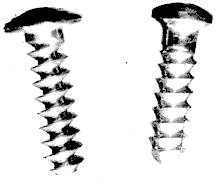
, 百拇医药
Figure1 L: A cancellous bone screw, R:A cortical bone screw
The pullout strength of a bone graft was measured by applying a uniaxial loading directed anteriorly through the silk sutures. A constant stroke control of 2 mm per minute was applied until there was a sharp drop in the load-displacement curve. The pullout strength of a simple bone graft, a bone graft with cortical bone screw fixation and a bone graft with cancellous bone screw fixation was determined respectively.
, 百拇医药
Clinical study.
Twenty cases of cervical spine disease or injury were admitted to our institute in the period from September 1993 to February 1996 and they were treated with anterior cervical spine bone grafting fixed with interference cancellous bone screw fixation. The 20 patients consisted of 16 male and 4 female with an average age of 43.4 years and an age range from 38 to 59. Thirteen patients suffered from cervical spine fracture / dislocation and 7 from cervical spondylotic myelopathy. The injured level was C4-6 in 11 cases and C3 in 2. According to Frankel grading, 6 cases were in grade B, 4 in grade C and 3 in grade D. In SEP determination, prolongation of the incubation period in various degrees and abnormal wave forms were observed. All the 7 cases of cervical spondylotic myelopathy belonged to the mixed type of spinal cord and nerve roots and 5 cases out of the 7 complained of sensory changes, motor weakness and reflex changes and radical pain of one arm was complained of in 1 case. In the other 2 cases, incomplete paralysis of 2 lower limbs and radical pain of 2 arms were complained of.
, 百拇医药
The diagnosis of cervical spine fracture / dislocation was established on the basis of clinical symptoms and x-ray films. Compression of the spinal cord was revealed with CT and MRI in 5 cases. The diagnosis of cervical spondylotic myelopathy was established on the basis of clinical symptoms confirmed with radiographic examination and MRI.
Generally, patients with cervical spine fracture / dislocation underwent skull traction for 2 weeks before surgical intervention . In case of stranded locking of the small joints of the cervical spine, operation had to be done after the reduction of the small joints. In 2 cases of fracture of the upper joint process and stranded locking of the small joints, traction failed to reduce the abnormality and an operation through the posterior route was done first to release stranded locking and then anterior cervical discectomy or corpectomy with fusion was done.
, http://www.100md.com
When skull traction was maintained, cervical plexus blocking was administered and the cervical vertebrae were exposed through the anterior route. The patient was operated on with discectomy or corpectomy and grafted with bone plate with one of the 4 techniques mentioned above according to the clinical conditions. Eventually, interference cancellous bone screw fixation was applied. The bone grafting covered one intervertebral space in 6 cases, 2 in 9, 3 in 4 and 4 in 1.
, 百拇医药
Postoperatively, every patient was put in the neutral position for 2 weeks and the head rotation was restricted with sand bags. Then, the 15 cases with the fixation of 1 or 2 interspaces were protected with cervical collar for 10 weeks and the 5 cases with the fixation of 3 or 4 incerspaces were fixed with plaster cast instead of cervical collar.
RESULTS
When only bone graft was done without any reinforced fixation, The pullout strength showed no statistically significant difference between Smith-Robinson and Bailey techniques (62.60±26.70 N vs 77.4±14.02 N). When interference cortical bone screw fixation was used, the pullout strength was increased to 88.90±24.00 N and 88.10±16.55 N for the 2 techniques respectively, which showed no significant difference between the 2 techniques and from those of bone graft alone. In the group of cancellous bone screw fixation, the pullout strength was increased to 144.88±38.42 N and 144.64±33.67N for the 2 techniques respectively which was significantly higher than those of bone graft alone (P<0.05).
, 百拇医药
In the corpectomy and fusion model, the pullout strength in the bone graft group was decreased to 64.64±14.97 N and 65.50±15.08N for the modified Smith-Robinson Bailey techniques respectively as compared with the corresponding data of the discectomy and fusion model. Interference cancellous bone screw fixation increased the pullout strength to 138.16±25.88 N and 126.10±48.04 N for the 2 techniques respectively, which was significantly higher than those of bone graft alone group and cortical bone screw fixation group (P<0.05).
, 百拇医药
The 20 cases of our series healed well postoperatively and their symptoms and signs were improved in various degrees. Sixteen cases were followed up from 3 months to 2 1/2 years with an average of 1 year and 8 months. No case of the dislodgement of the bone graft or screw was found which was confirmed with radiography (Fig.2). The healing time of the bone grafts ranged from 10 to 14 weeks with an average of 12 weeks.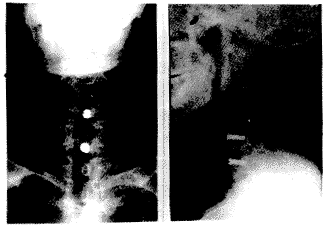
, http://www.100md.com
Figure 2 Interference cancellous bone screw fixation postoperatively, L:Anterioposterior film R: Lateral film
The normal anatomic curvature of the cervical spine was excellently maintained and no translocation of cervical vertebra was found in all the cases of cervical spine fracture/dislocation. Among the 4 cases of Frankel grade B, 3 were improved to grade D and 1 to grade E; and 3 cases of grade C and 3 cases of grade D were improved to grade E respectively. The 7 cases who were improved to grade E after treatment showed normal SEP waves.
, 百拇医药
The symptoms of cord compression disappeared in 7 cases of cervical spondylotic myelopathy and 2 patients still complained of numbness of their fingers but they could lead a normal life. One case was lost in followup right after discharge and the followup of 3 cases was interrupted after 3 months.
DISCUSSION
Cervical spine decompression and bone graft fusion throughout the anterior route has widely been used to treat cervical spine fracture / dislocation and disc degenerative disease. Unfortunately the forward shear force produced in the activity of cervical vertebrae could affect the bone grafts to be migrated or even dislodged. The migration or dislodgement of the bone grafts remain to be a problem even though various modifications of the bone grafting technique are proposed. Consequently, many internal fixation devices have been used in the operation of anterior cervical spine decompression. There are 2 kinds of instruments. One is steel plate fixed with screws such as AO/AISF “I” plate and Casper plate and the other is various kinds of screws such as intraosseous screw,8 memory expansion screw,9 etc. The employment of the plate and screw fixation devices is helpful to increase the healing stability between the cervical spine and bone graft constructs. Their disadvantage is that the steel plate and screws form a high protrusion on the anterior surface of the cervical spine and the protrusion is likely to compress or even erode the posteroesophageal wall. The memory expansion screws are able to fix torsional bone graft without the additional bone grafting but they are not efficient when bone fusion involves more than 3 interspaces.
, 百拇医药
As a result of the conditions mentioned above, the orthopedic surgeons are still interested in the development of better fixation devices. The migration rate of Simmons graft is quite low but it is difficult to manipulate and dangerous to the patient.10 Smith-Robinson and Bailey techniques are frequently employed for discectomy. When degenerative process involves 2 or more intervertebral discs, we have designed modifications for the Smith-Robinson and Bailey techniques and employed them for corpectomy. The iliac crest is an ideal site to provide bone graft since it possesses 3 walls of cortical bone and is thicker than height of an intervertaebral space. The bone graft from iliac crest not only can sustain quite large axial loading but also can support the intervertebral space and enlarge the spinal canal and intervertebral formina.
, http://www.100md.com
It was found in our biomechanial study that the pullout strength of the cancellous bone screw fixation group was significantly higher than that of the bone graft group and the cortical bone screw fixation group. The cortical one screws can also increase the pullout strength which showed no statistically significant difference from that of the bone graft group. It can be concluded that our specially made cancellous bone screws or AO cancellous bone screws are of choice for interference screw fixation of bone graft in cervical discectomy or corpectomy. Our data provide the basis for their clinical application.
, 百拇医药
There is no definite biomechanical model to evaluate the healing stability of bone grafts and the efficacy of internal fixation devices at present and quantitative data describing the loading of bone grafts and fixation devices are not available because the human body is subjected to a constant dynamic biomechanical condition. We measured the pullout strength in vitro which can reveal the stability of interference screw fixation quite accurately. After the resection of 1 or 2 intervertebral discs, the bending rigidity of the cervical spine is decreased but its extension stability is not changed. The bending rigidity is regained after the fusion of vertebral bodies. Axial rotation of the cervical spine contributes greatly to the dislodgement of bone grafts because it induces shear force. Cancellous bone screws are used to fix the bone grafts because their deep thread generates large holding force to increase the anti-shear capacity. Moreover, the instantaneous center of motion of the cervical spine is posterior to the disc center to which the interference screws are close. So the interference screws sustain less shear. This is the mechanical reason for firm fixation of interference screws.
, 百拇医药
No case of dislodgement of bone graft or fixation screw was found in all the 20 cases of our series in the followup period, which verifies the efficiency of the specially made cancellous bone screws. The pullout strength of the cancellous bone screws was larger in discectomy than in corpectomy, which may be due to the fact that the contact force may be decreased with a longer graft in corpectomy. This finding was consistent with that reported by Vazquez-Seoane et al.7
, http://www.100md.com
In the 20 cases of our series, 3 intervertebral discs were resected in 4 cases and 4 resected in 1 case. The bone graft used was longer than that used in cases of 2 disc-resection. The loading test to determine the pullout strength in such cases was not done in vitro because of the deficiency of specimens. For the safety of these 5 patients, external fixation was used in addition to the internal fixation.
Can interference screw fixation affect the healing of bone grafts Vazquez-Seoane et al reported that bony healing occurred in both the fixation and nonfixation groups in 12 weeks.7 Theoretically, interference screw fixation is beneficial to healing through its decreasing of the contact force of the bone grafts and its increasing of the stability of bone grafts. No case of nonunion was observed in our series. It can be said that interference screw fixation is favorable to bone healing as demonstrated in our cases.
, 百拇医药
It is believed by the authors that interference cancellous bone screw fixation is a simple efficient method in the management of cervical spine bone grafting.
REFERENCES
[1] Smith GW, Robinson RA. The treatment of cervical spine disease by removal of the intervertebral disc and interbody fusion. J Bone Joint Surg 1958; 40A∶607.
[2] Bailey RW, Badgley CE. Stabilization of the cervical spine by anterior fusion. J Bone Joint Surg (Am) 1960; 42∶565.
, 百拇医药
[3] Cloward RB. The anterior approach for removal of ruptured cervical discs. J Neurosurg 1958; 15∶602.
[4] Bohler J, Gavolernak T. Anterior plate stabilization for fracture-dislocation of the lower cervical spine. J Trauma 1980; 20∶203.
[5] Caspar W, Papavero L. The trapezial plate osteosynthesis: An advanced technology for internal stabilization in cervical spine injuries and for the treatment of neck instability due to non traumatic causes. Chir Organi Mov 1992; 77∶87.
, http://www.100md.com
[6] Zou D, Yoo J, Ordway, et al. Interference screw fixation of cervical grafts: A biomechanical study of a new method of cervical fixation. J Spinal Dis 1991; 4∶168.
[7] Vazquez-Seoane P, Yoo J, Zou D, et al. interference screw fixation of cervical grafts. Spine 1993; 18∶946.
[8] Chang KW, Lin GZ, Liu YW, et al. Intraosseons screw fixation of cervical graft construct after diskectomy. J Spinal Disorder 1994; 7∶126.
, 百拇医药
[9] Mei FR, Ren XJ, Wang WD. The biomechanical application of the memory expansion screw. J Bone Joint Surg (Chi) 1995; 10∶325.
[10] Simmons EH, Bhalla SK, Butt WP. Anterior cervical discectomy and fusion. J Bone Joint Surg (Br) 1996; 51∶225.
[11] Panjabi MM. Biomechanical evaluation of spinal fixation devices: I A conceptual framework. Spine 1988; 13∶1129., http://www.100md.com
单位:Department of Orthopedics,MEI Fang-rui(梅芳瑞), ZHANG Zheng-feng(张正丰) Xinqiao Hospital, the Third Military Medical University, Chongqing, 400037
关键词:
中华创伤杂志980445 Objective The healing stability of cervical spine bone grafts was compared under 3 different conditions and the clinical application of interference cancellous bone screw fixation for the cervical spine bone grafts after discectomy or corpectomy was reported.
, 百拇医药
Methods On 5 freshly prepared specimens of the cervical spine from adult human cadavers, the pullout strength of anterior cervical spine bone grafts after discectomy performed with Bailey and Smith-Robinson techniques was determined with biomechanical test under 3 conditions, bone grafts without fixation, bone grafts fixed with interference cortical bone screw and bone grafts fixed with interference cancellous bone screws.
Results The pullout strength in the first condition was 77.4±14.0 N and 62.6±26.7 N for Bailey and Smith-Robinson techniques respectively, that of the second condition was 88.8±24.0 N and 88.1±16.6 N for the 2 techniques respectively and that of the third condition was 144.88±38.4 N and 144.6±33.6 N for the 2 techniques respectively. The pullout strength was significantly higher under the third condition than under the first and second conditions. The pullout strength of cervical spine bone grafts after corpectomy performed with modified Bailey and Smith±Robinson techniques was also determined. The findings were in the similar pattern as those of the discectomy groups. In the 20 cases of cervical spine fracture/dislocation and cervical spondylotic myelopathy, solid bony healing occurred 10 to 14 weeks (an average of 12 weeks) after surgery. The patients were followed up from 3 months to 2.5 years and no case showing dislodgement of the grafts or screw was found in the followup period.
, 百拇医药
Conclusion Interference screw fixation is able to increase the healing stability of anterior cervical spine bone grafts and minimize the possibility of the dislodgement of the grafts or screws, so it is the technique of choice for the internal fixation of cervical spine bone grafts.
Anterior cervical discectomy and fusion is an established procedure for the treatment of spondylotic myelopathy and cervical spine fracture/dislocation. One of the common complications in the early stage after operation is the dislodgement of the bone graft and redislocation. Various operative procedures such as Smith±Robinson,1 Bailey2 and Cloward3 techniques have been developed and many internal fixation methods such as “Ⅰ” plate4 and Casper plate5 designed. The techniques listed above can increase the healing stability of the bone grafts but can not totally prevent the occurrence of the dislodgement of the bone grafts. Besides, internal fixation sometimes can result in other complications.
, 百拇医药
In 1991, Zou et al6 proposed the concept of interference screw fixation of the cervical spine and later Vazquez - Seoane et al7 performed a combined study concerning interference screw fixation which included a biomechanical study in vitro and an animal experimentation. Unfortunately, no clinical application was discussed. On the basis of the concept of interference screw fixation, the authors of this paper manufactured 4.0 mm cancellous bone screws and compared the healing stability of cervical spine bone grafts after simple bone grafting and simple grafting reinforced with cortical bone screws and cancellous bone screws. Here is our report.
, 百拇医药
MATERIALS AND METHODS
Biomechanical study
Five freshly prepared specimens of cervical spine were obtained from adult human cadavers, x-ray-films revealed no degenerative changes of the cervical spine. The specimens were stored at -40° ready for use. When experiments were being done, all the musculature attaching to the spine was removed after the specimen was fully thawed. On every specimen, one test to determine the pullout strength after discectomy of Smith-Robinson technique and Bailey technique and one test to determine the pullout strength after corpectomy of modified Smith-Robinson technique and modified Bailey technique could be performed.
, 百拇医药
Bone grafting was done with 4 techniques, that is , standard Smith-Robinson and Bailey techniques after discectomy and modified Smith-Robinson and Bailey techniques after corpectomy. The grafts were obtained from the iliac crest of a human cadaver. The size of the graft was 14-15 mm in depth and 13-14 mm in width. The graft was 2 mm thicker than the resected intervertebral disc or the partially resected vertebral body. A 1.5 mm hole was drilled through the 2 lateral cortical walls of one graft. The graft was then put into the prepared interspace with one of the 4 techniques mentioned above.
, 百拇医药
Two types of screws were used for interference screw fixation, that is, 4.0 mm cortical bone screws and cancellous bone screws. The cancellous bone screws were specially made of 1 Gr18Ni9Ti by the Sichuan Factory of Instruments and Meters in Chongqing. The cancellous bone screws are 14 mm in length, 4 mm in diameter, 2 mm in interdiameter, 1.5 mm in thread pitch, 8 mm in nut diameter and 1.5 mm in nut height. The cancellous bone screws, compared with the AO 3.5 mm screws, are more deeply threaded, highly pitched and plately nutted (Fig.1). The method to fix the 2 types of screws was similar. 2.5 mm holes were drilled on the interfaces of the bone graft and the 2 vertebral bodies. Then the screws were inserted. A new piece of bone graft was needed in one test since a part of the bone graft would be damaged during the pullout testing.
, 百拇医药
Figure1 L: A cancellous bone screw, R:A cortical bone screw
The pullout strength of a bone graft was measured by applying a uniaxial loading directed anteriorly through the silk sutures. A constant stroke control of 2 mm per minute was applied until there was a sharp drop in the load-displacement curve. The pullout strength of a simple bone graft, a bone graft with cortical bone screw fixation and a bone graft with cancellous bone screw fixation was determined respectively.
, 百拇医药
Clinical study.
Twenty cases of cervical spine disease or injury were admitted to our institute in the period from September 1993 to February 1996 and they were treated with anterior cervical spine bone grafting fixed with interference cancellous bone screw fixation. The 20 patients consisted of 16 male and 4 female with an average age of 43.4 years and an age range from 38 to 59. Thirteen patients suffered from cervical spine fracture / dislocation and 7 from cervical spondylotic myelopathy. The injured level was C4-6 in 11 cases and C3 in 2. According to Frankel grading, 6 cases were in grade B, 4 in grade C and 3 in grade D. In SEP determination, prolongation of the incubation period in various degrees and abnormal wave forms were observed. All the 7 cases of cervical spondylotic myelopathy belonged to the mixed type of spinal cord and nerve roots and 5 cases out of the 7 complained of sensory changes, motor weakness and reflex changes and radical pain of one arm was complained of in 1 case. In the other 2 cases, incomplete paralysis of 2 lower limbs and radical pain of 2 arms were complained of.
, 百拇医药
The diagnosis of cervical spine fracture / dislocation was established on the basis of clinical symptoms and x-ray films. Compression of the spinal cord was revealed with CT and MRI in 5 cases. The diagnosis of cervical spondylotic myelopathy was established on the basis of clinical symptoms confirmed with radiographic examination and MRI.
Generally, patients with cervical spine fracture / dislocation underwent skull traction for 2 weeks before surgical intervention . In case of stranded locking of the small joints of the cervical spine, operation had to be done after the reduction of the small joints. In 2 cases of fracture of the upper joint process and stranded locking of the small joints, traction failed to reduce the abnormality and an operation through the posterior route was done first to release stranded locking and then anterior cervical discectomy or corpectomy with fusion was done.
, http://www.100md.com
When skull traction was maintained, cervical plexus blocking was administered and the cervical vertebrae were exposed through the anterior route. The patient was operated on with discectomy or corpectomy and grafted with bone plate with one of the 4 techniques mentioned above according to the clinical conditions. Eventually, interference cancellous bone screw fixation was applied. The bone grafting covered one intervertebral space in 6 cases, 2 in 9, 3 in 4 and 4 in 1.
, 百拇医药
Postoperatively, every patient was put in the neutral position for 2 weeks and the head rotation was restricted with sand bags. Then, the 15 cases with the fixation of 1 or 2 interspaces were protected with cervical collar for 10 weeks and the 5 cases with the fixation of 3 or 4 incerspaces were fixed with plaster cast instead of cervical collar.
RESULTS
When only bone graft was done without any reinforced fixation, The pullout strength showed no statistically significant difference between Smith-Robinson and Bailey techniques (62.60±26.70 N vs 77.4±14.02 N). When interference cortical bone screw fixation was used, the pullout strength was increased to 88.90±24.00 N and 88.10±16.55 N for the 2 techniques respectively, which showed no significant difference between the 2 techniques and from those of bone graft alone. In the group of cancellous bone screw fixation, the pullout strength was increased to 144.88±38.42 N and 144.64±33.67N for the 2 techniques respectively which was significantly higher than those of bone graft alone (P<0.05).
, 百拇医药
In the corpectomy and fusion model, the pullout strength in the bone graft group was decreased to 64.64±14.97 N and 65.50±15.08N for the modified Smith-Robinson Bailey techniques respectively as compared with the corresponding data of the discectomy and fusion model. Interference cancellous bone screw fixation increased the pullout strength to 138.16±25.88 N and 126.10±48.04 N for the 2 techniques respectively, which was significantly higher than those of bone graft alone group and cortical bone screw fixation group (P<0.05).
, 百拇医药
The 20 cases of our series healed well postoperatively and their symptoms and signs were improved in various degrees. Sixteen cases were followed up from 3 months to 2 1/2 years with an average of 1 year and 8 months. No case of the dislodgement of the bone graft or screw was found which was confirmed with radiography (Fig.2). The healing time of the bone grafts ranged from 10 to 14 weeks with an average of 12 weeks.
, http://www.100md.com
Figure 2 Interference cancellous bone screw fixation postoperatively, L:Anterioposterior film R: Lateral film
The normal anatomic curvature of the cervical spine was excellently maintained and no translocation of cervical vertebra was found in all the cases of cervical spine fracture/dislocation. Among the 4 cases of Frankel grade B, 3 were improved to grade D and 1 to grade E; and 3 cases of grade C and 3 cases of grade D were improved to grade E respectively. The 7 cases who were improved to grade E after treatment showed normal SEP waves.
, 百拇医药
The symptoms of cord compression disappeared in 7 cases of cervical spondylotic myelopathy and 2 patients still complained of numbness of their fingers but they could lead a normal life. One case was lost in followup right after discharge and the followup of 3 cases was interrupted after 3 months.
DISCUSSION
Cervical spine decompression and bone graft fusion throughout the anterior route has widely been used to treat cervical spine fracture / dislocation and disc degenerative disease. Unfortunately the forward shear force produced in the activity of cervical vertebrae could affect the bone grafts to be migrated or even dislodged. The migration or dislodgement of the bone grafts remain to be a problem even though various modifications of the bone grafting technique are proposed. Consequently, many internal fixation devices have been used in the operation of anterior cervical spine decompression. There are 2 kinds of instruments. One is steel plate fixed with screws such as AO/AISF “I” plate and Casper plate and the other is various kinds of screws such as intraosseous screw,8 memory expansion screw,9 etc. The employment of the plate and screw fixation devices is helpful to increase the healing stability between the cervical spine and bone graft constructs. Their disadvantage is that the steel plate and screws form a high protrusion on the anterior surface of the cervical spine and the protrusion is likely to compress or even erode the posteroesophageal wall. The memory expansion screws are able to fix torsional bone graft without the additional bone grafting but they are not efficient when bone fusion involves more than 3 interspaces.
, 百拇医药
As a result of the conditions mentioned above, the orthopedic surgeons are still interested in the development of better fixation devices. The migration rate of Simmons graft is quite low but it is difficult to manipulate and dangerous to the patient.10 Smith-Robinson and Bailey techniques are frequently employed for discectomy. When degenerative process involves 2 or more intervertebral discs, we have designed modifications for the Smith-Robinson and Bailey techniques and employed them for corpectomy. The iliac crest is an ideal site to provide bone graft since it possesses 3 walls of cortical bone and is thicker than height of an intervertaebral space. The bone graft from iliac crest not only can sustain quite large axial loading but also can support the intervertebral space and enlarge the spinal canal and intervertebral formina.
, http://www.100md.com
It was found in our biomechanial study that the pullout strength of the cancellous bone screw fixation group was significantly higher than that of the bone graft group and the cortical bone screw fixation group. The cortical one screws can also increase the pullout strength which showed no statistically significant difference from that of the bone graft group. It can be concluded that our specially made cancellous bone screws or AO cancellous bone screws are of choice for interference screw fixation of bone graft in cervical discectomy or corpectomy. Our data provide the basis for their clinical application.
, 百拇医药
There is no definite biomechanical model to evaluate the healing stability of bone grafts and the efficacy of internal fixation devices at present and quantitative data describing the loading of bone grafts and fixation devices are not available because the human body is subjected to a constant dynamic biomechanical condition. We measured the pullout strength in vitro which can reveal the stability of interference screw fixation quite accurately. After the resection of 1 or 2 intervertebral discs, the bending rigidity of the cervical spine is decreased but its extension stability is not changed. The bending rigidity is regained after the fusion of vertebral bodies. Axial rotation of the cervical spine contributes greatly to the dislodgement of bone grafts because it induces shear force. Cancellous bone screws are used to fix the bone grafts because their deep thread generates large holding force to increase the anti-shear capacity. Moreover, the instantaneous center of motion of the cervical spine is posterior to the disc center to which the interference screws are close. So the interference screws sustain less shear. This is the mechanical reason for firm fixation of interference screws.
, 百拇医药
No case of dislodgement of bone graft or fixation screw was found in all the 20 cases of our series in the followup period, which verifies the efficiency of the specially made cancellous bone screws. The pullout strength of the cancellous bone screws was larger in discectomy than in corpectomy, which may be due to the fact that the contact force may be decreased with a longer graft in corpectomy. This finding was consistent with that reported by Vazquez-Seoane et al.7
, http://www.100md.com
In the 20 cases of our series, 3 intervertebral discs were resected in 4 cases and 4 resected in 1 case. The bone graft used was longer than that used in cases of 2 disc-resection. The loading test to determine the pullout strength in such cases was not done in vitro because of the deficiency of specimens. For the safety of these 5 patients, external fixation was used in addition to the internal fixation.
Can interference screw fixation affect the healing of bone grafts Vazquez-Seoane et al reported that bony healing occurred in both the fixation and nonfixation groups in 12 weeks.7 Theoretically, interference screw fixation is beneficial to healing through its decreasing of the contact force of the bone grafts and its increasing of the stability of bone grafts. No case of nonunion was observed in our series. It can be said that interference screw fixation is favorable to bone healing as demonstrated in our cases.
, 百拇医药
It is believed by the authors that interference cancellous bone screw fixation is a simple efficient method in the management of cervical spine bone grafting.
REFERENCES
[1] Smith GW, Robinson RA. The treatment of cervical spine disease by removal of the intervertebral disc and interbody fusion. J Bone Joint Surg 1958; 40A∶607.
[2] Bailey RW, Badgley CE. Stabilization of the cervical spine by anterior fusion. J Bone Joint Surg (Am) 1960; 42∶565.
, 百拇医药
[3] Cloward RB. The anterior approach for removal of ruptured cervical discs. J Neurosurg 1958; 15∶602.
[4] Bohler J, Gavolernak T. Anterior plate stabilization for fracture-dislocation of the lower cervical spine. J Trauma 1980; 20∶203.
[5] Caspar W, Papavero L. The trapezial plate osteosynthesis: An advanced technology for internal stabilization in cervical spine injuries and for the treatment of neck instability due to non traumatic causes. Chir Organi Mov 1992; 77∶87.
, http://www.100md.com
[6] Zou D, Yoo J, Ordway, et al. Interference screw fixation of cervical grafts: A biomechanical study of a new method of cervical fixation. J Spinal Dis 1991; 4∶168.
[7] Vazquez-Seoane P, Yoo J, Zou D, et al. interference screw fixation of cervical grafts. Spine 1993; 18∶946.
[8] Chang KW, Lin GZ, Liu YW, et al. Intraosseons screw fixation of cervical graft construct after diskectomy. J Spinal Disorder 1994; 7∶126.
, 百拇医药
[9] Mei FR, Ren XJ, Wang WD. The biomechanical application of the memory expansion screw. J Bone Joint Surg (Chi) 1995; 10∶325.
[10] Simmons EH, Bhalla SK, Butt WP. Anterior cervical discectomy and fusion. J Bone Joint Surg (Br) 1996; 51∶225.
[11] Panjabi MM. Biomechanical evaluation of spinal fixation devices: I A conceptual framework. Spine 1988; 13∶1129., http://www.100md.com