疼痛程度在关节炎和抑郁症状间的中介效应研究
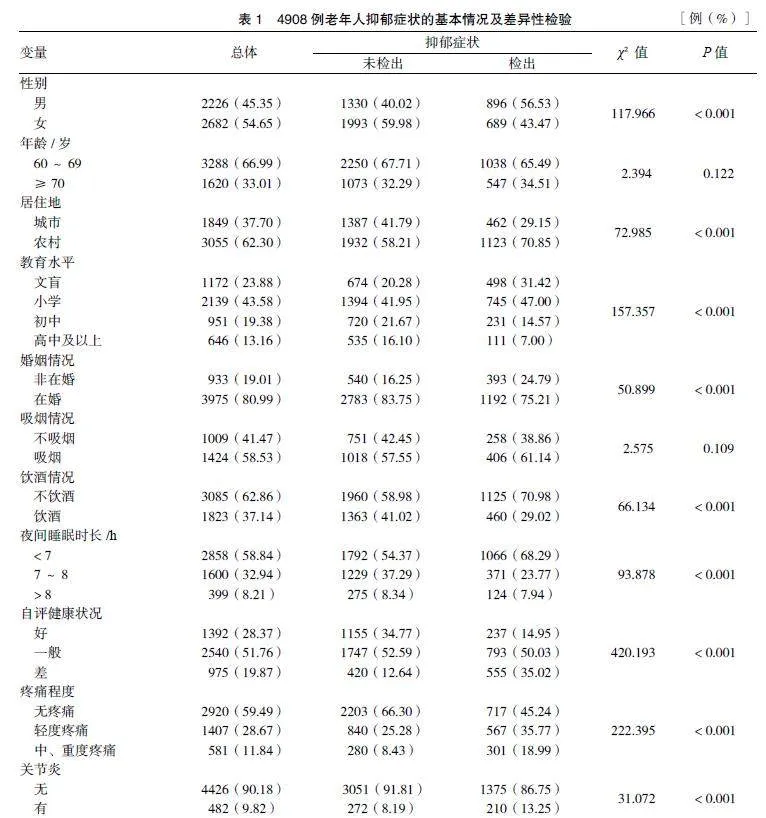
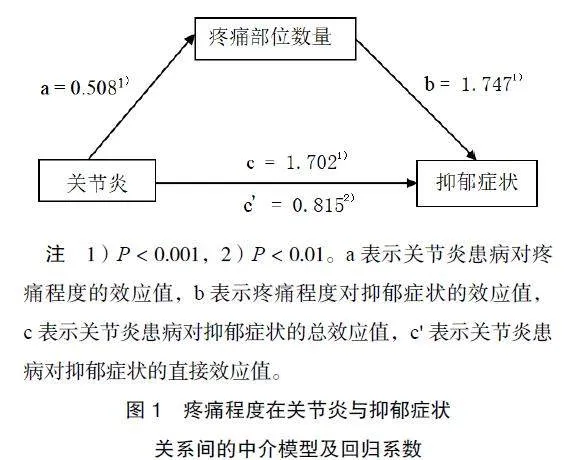
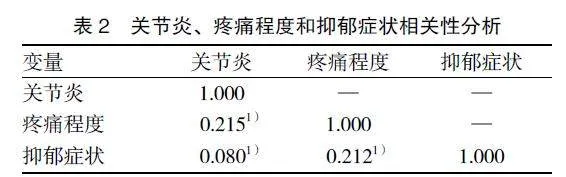
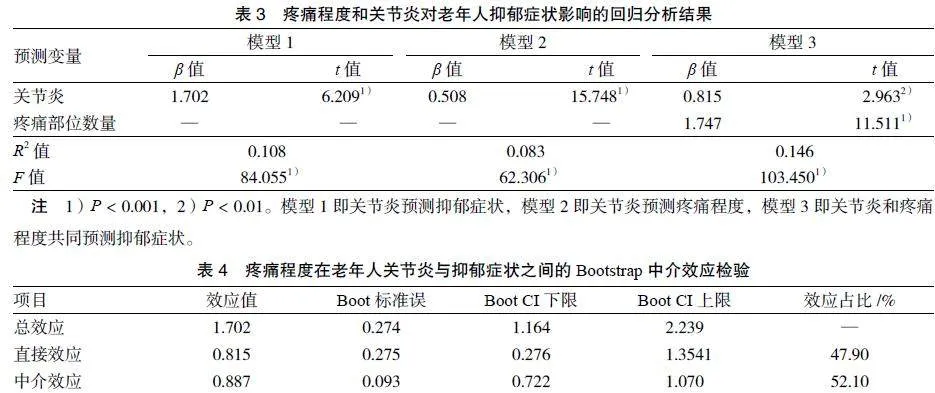
【摘 要】目的:探究疼痛程度在关节炎与抑郁症状之间的中介效应,为预防和控制中国老年人抑郁症状进展提供依据。方法:从2020年中国健康与养老追踪调查(CHARLS)中选取4908例研究对象,通过统计描述、Spearman相关性分析和逐步回归分析,评估关节炎、疼痛程度与抑郁症状之间的关系并建立中介模型。使用Bootstrap方法检验疼痛程度在老年人关节炎与抑郁症状之间的中介效应。结果:老年人关节炎患病率为9.82%,抑郁症状检出率为32.29%。回归分析表明,关节炎、疼痛程度对抑郁症状有显著影响(关节炎:t = 2.963,P < 0.01;疼痛程度:t = 11.511,P < 0.001)。中介模型结果显示,疼痛程度在老年人关节炎与抑郁症状间存在部分中介效应,总效应值为1.702,直接效应值为0.815,中介效应值为0.887(占总效应的52.10%)。结论:疼痛程度在关节炎患病与抑郁症状之间存在部分中介作用,应重视关节炎患者的疼痛管理,缓解关节炎对老年人心理健康的负面影响,从而降低抑郁症状的患病率。
【关键词】 关节炎;抑郁症状;疼痛程度;老年人;中介效应
Study on the Mediating Effect of Pain Level Between Arthritis and Depression Symptoms
LI Zhen-wei,ZHANG Chao,ZHANG Jun,PI Hong-lin
【ABSTRACT】Objective:To explore the mediating effect of pain level between arthritis and depression symptoms,and provide a basis for preventing and controlling the progression of depression symptoms in Chinese elderly people.Methods:4908 study subjects were selected from the China Health and Retirement Longitudinal Study in 2020(CHARLS).and the relationship between arthritis ......
您现在查看是摘要页,全文长 12933 字符。